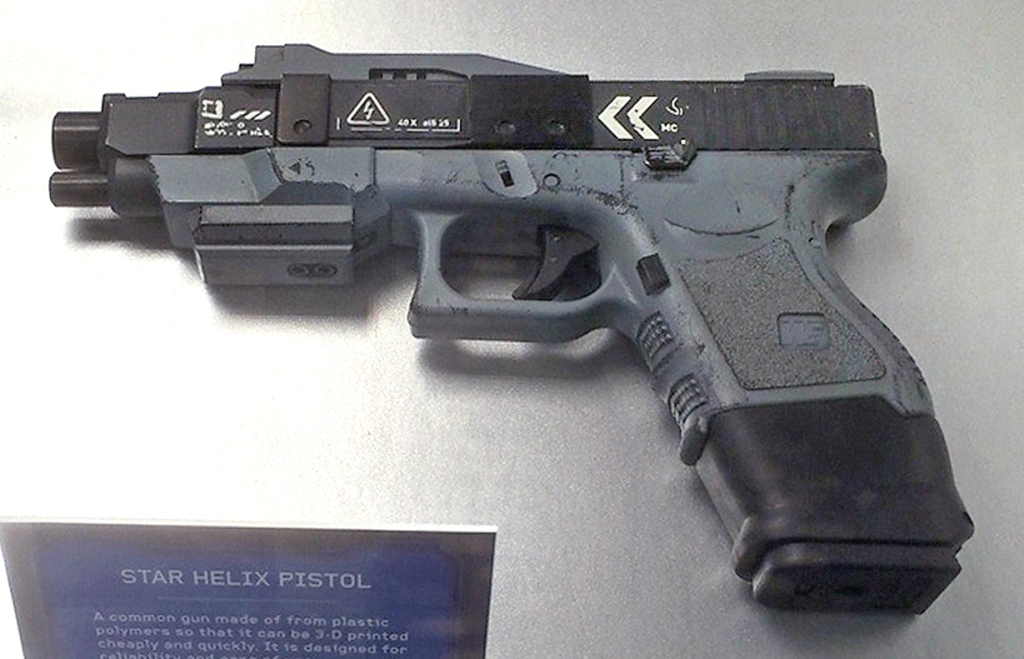
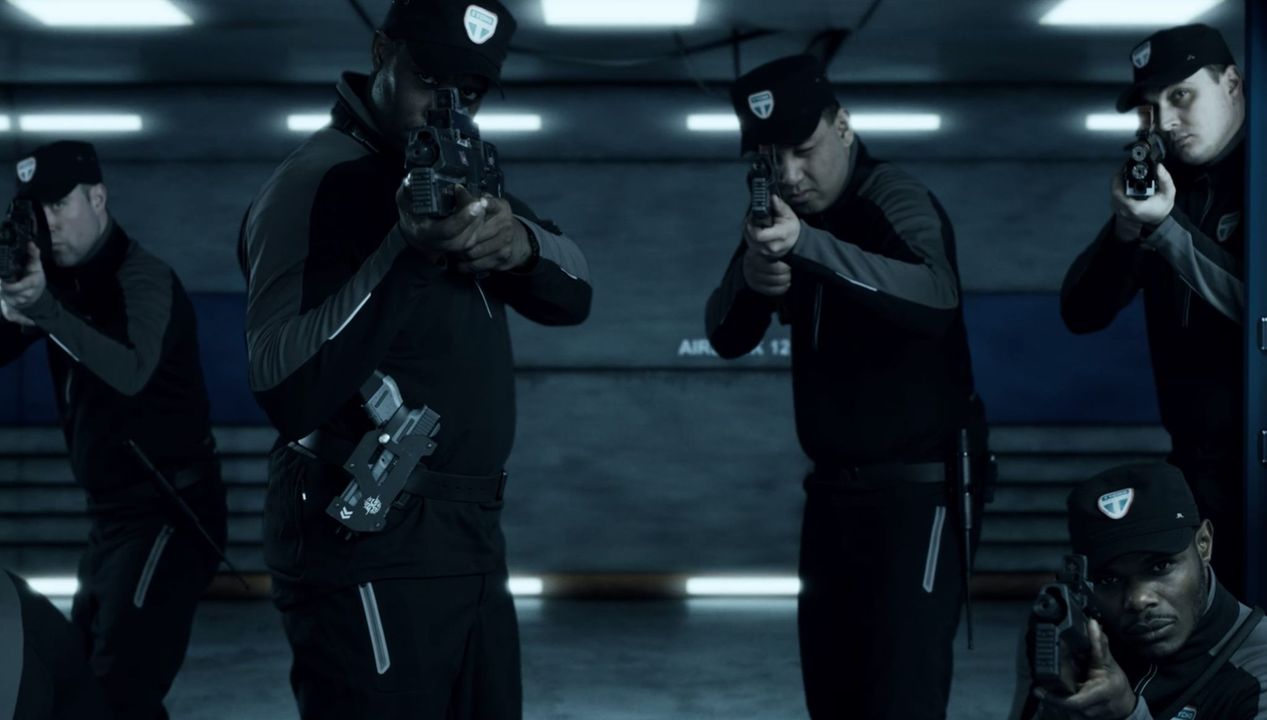
This type of weapon is the most commonly used sidearm by both UN military personnel, as well as private security and OPA operatives throughout the outer planets. Though often referred to as the Star Helix Pistol, it is in fact used by both UN elements, Star Helix security on Ceres, CPM security on Eros by the local security forces on Tycho station (nterestingly emblazoned with a Star Helix logo) and by other OPA factions.
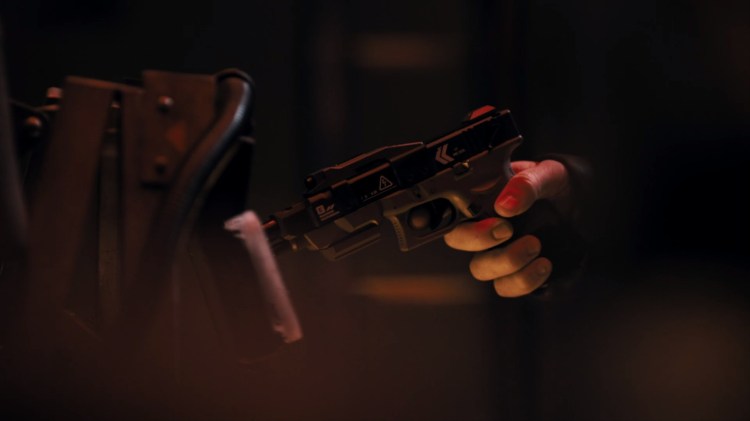
The weapon is never discussed explicitly in the books, but in the series it appears to be custom-made for use in confined quarters. I has little-or-no recoil, limited percussive effect (i.e. the shock wave/bang created by firing the gun in a small, closed room will not blow out your ear drums) and just enough power to punch through its intended targets without being a danger to the ship or station you are on. It also has a small light mounted on top of the gun. Ammunition type or quantity is unknown, though the lack of ejection ports for spent casings suggests the use of caseless ammunition of some sort.
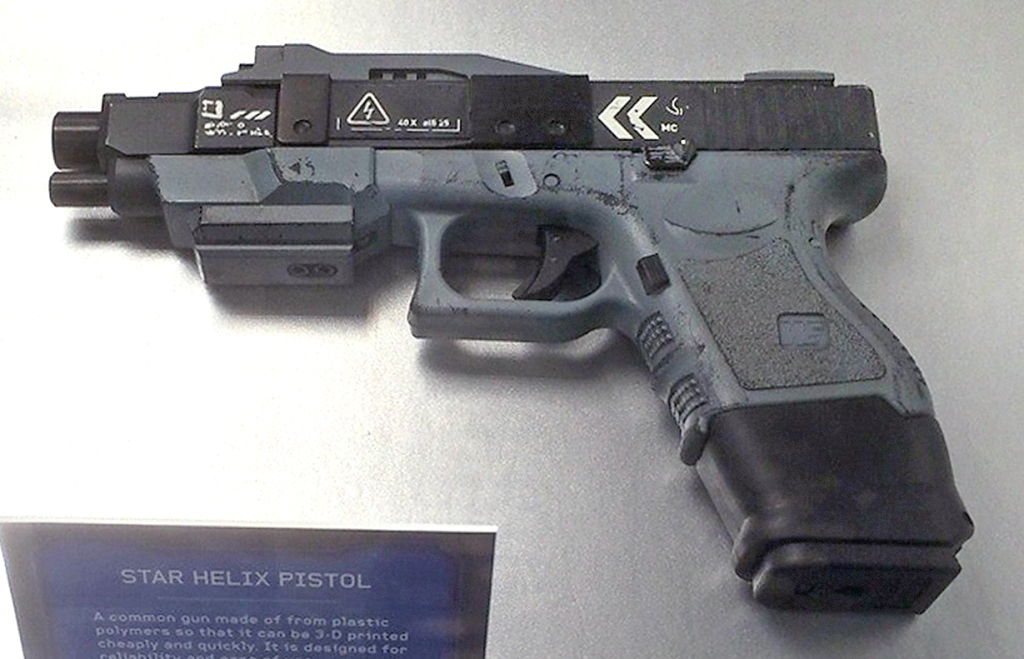
Another hint regarding ammunition is the danger sign for electricity on the side of the weapon. It is unknown if this is somehow connected to the firing mechanism, or if it refers to the power source for the light on top of the gun. However, it could suggest that the weapon is a so-called “coil” or “gauss gun” which uses electricity to accellerate the projectile. This would make the weapon more suitable for confined quarters, as it nearly eliminates the shock wave caused by the expanding gases that are generated when firing a conventional gun, leaving only the shock wave generated by the projectile as it displaces the air in front of it in the barrel and as it travels to its target.
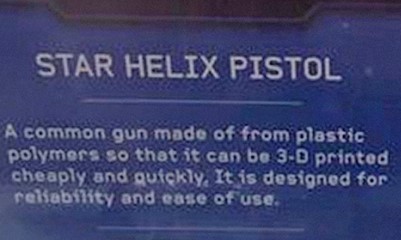
The apparent reason for the widespread adoption of the gun is that it has been designed for ease of production. It uses advanced composite and plastic components that can be made using additive manufacturing methods (more commonly known as 3D-printing.) This fact was not mentioned explicitly in the books, but was revealed in a display of props during the 2015 San Diego Comic Con.
Real World Inspiration
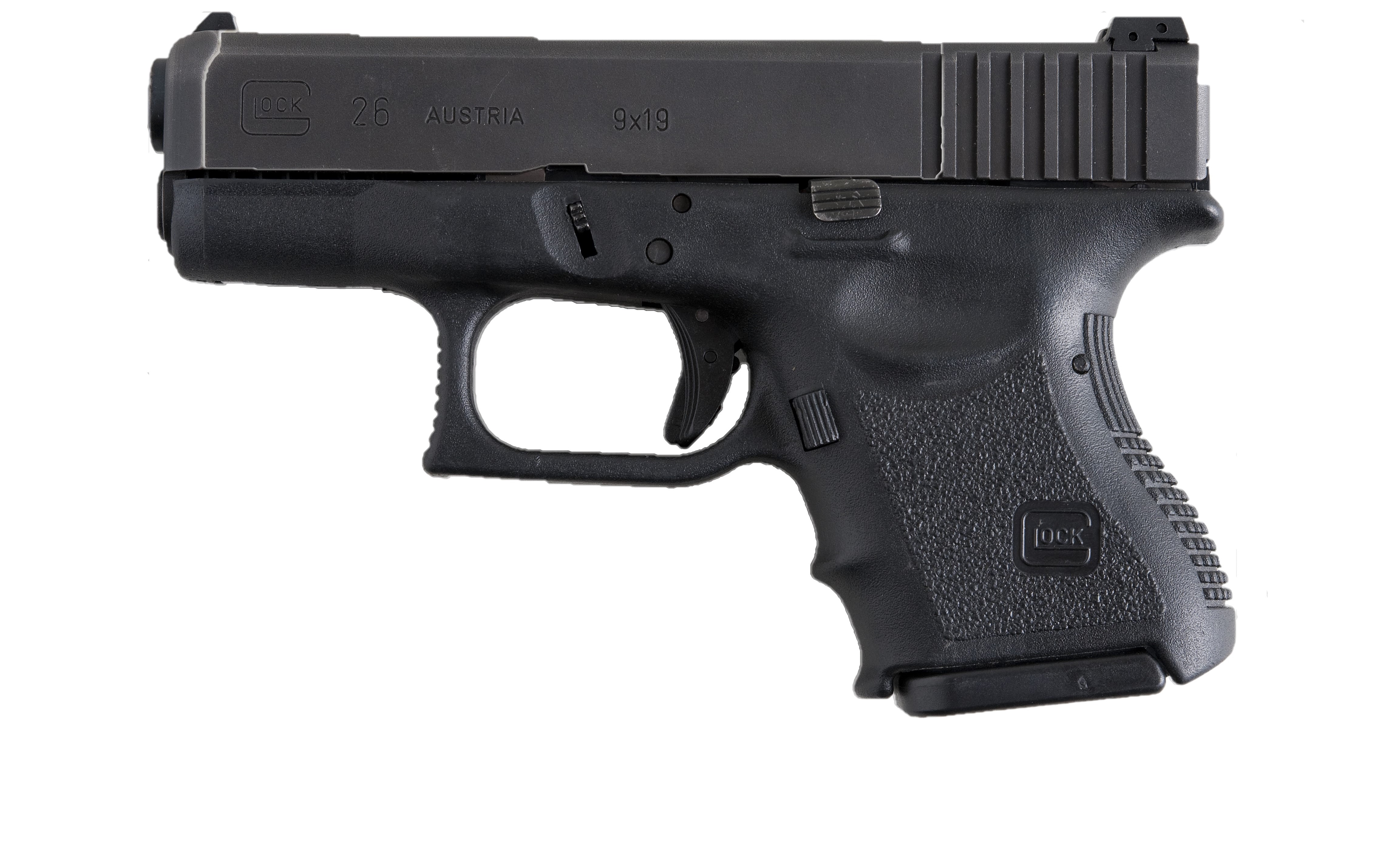
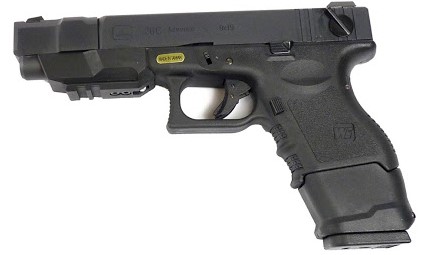
This weapon appears to be based on the Glock 26, or more likely, an airsoft equivalent. Glock is an Austrian weapons manufacturer, which also has extensive operations in the United States. Glock-designs are very common in movies and TV, often heavily modified and adapted to the needs at hand. In this case, the base design is a compact version of the gun with a shorter barrel and hand grip. This was likely a key reason for why it was selected for the show, as the smaller size allows the prop designers to add new elements to the gun without creating something that looks out of proportion to the hand of the shooteer.
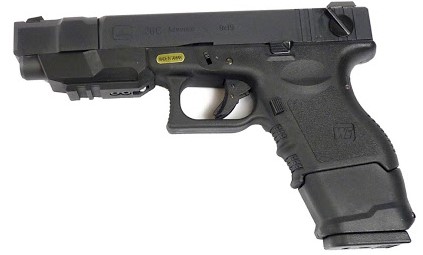
Below you will find comparisons first between the original Glock 26 and its airsoft equivalent. Next you is a comparison of the airsoft-version and the prop gun from the show (the latter two I found here). Note the electricity danger symbol on the side of the prop gun, which again may refer to either the firing mechanism or the power source for the light.
Some thoughts on 3D-printed guns
The fact that the Star Helix Pistol is supposed to be made out of 3D-printed components has some interesting implications. 3D-printing of firearms is in its very early stages today, and so far its effects on the gun market have been limited. The reason is that 3D-printers and other additive manufacturing methods have struggled to produce components with the necessary precision and strength to fire more than one shot at the time, and then with relatively low power. But what happens when technology improves, and that is no longer the case? Or if a 3D-printed gun is able to use electricity to hurl a projectile at its target rather than a chemical propellant like gunpowder?
What makes this important is the fact that current gun control laws base themselves on the fact that making weapons and ammunition isn’t easy. It requires major investments in highly specialized equipment, personnel and raw materials, all of which is possible to control and regulate. Once you have done that, you can try to manage the distribution and resale of what is being made.
But what if all you need is a standard 3D-printer, standard raw materials, and access to the design files? And what happens to the entire gun industry? Some governments are already beginning to introduce legislation to control this, by criminalizing the possession of plans and designs for 3D-printed guns. But in a future like we see in The Expanse, that is not likely to be enough.
At the very least, cops on Ceres can forget about finding a killer based on the bullets or weapons used – they may have been custom made for that one shot, and then melted down or thrown out an airlock…
Read more about 3D-printed firearms on Wikipedia.
Gallery






 The Weapons of The Expanse
8 thoughts on “UN Pattern Pistol”