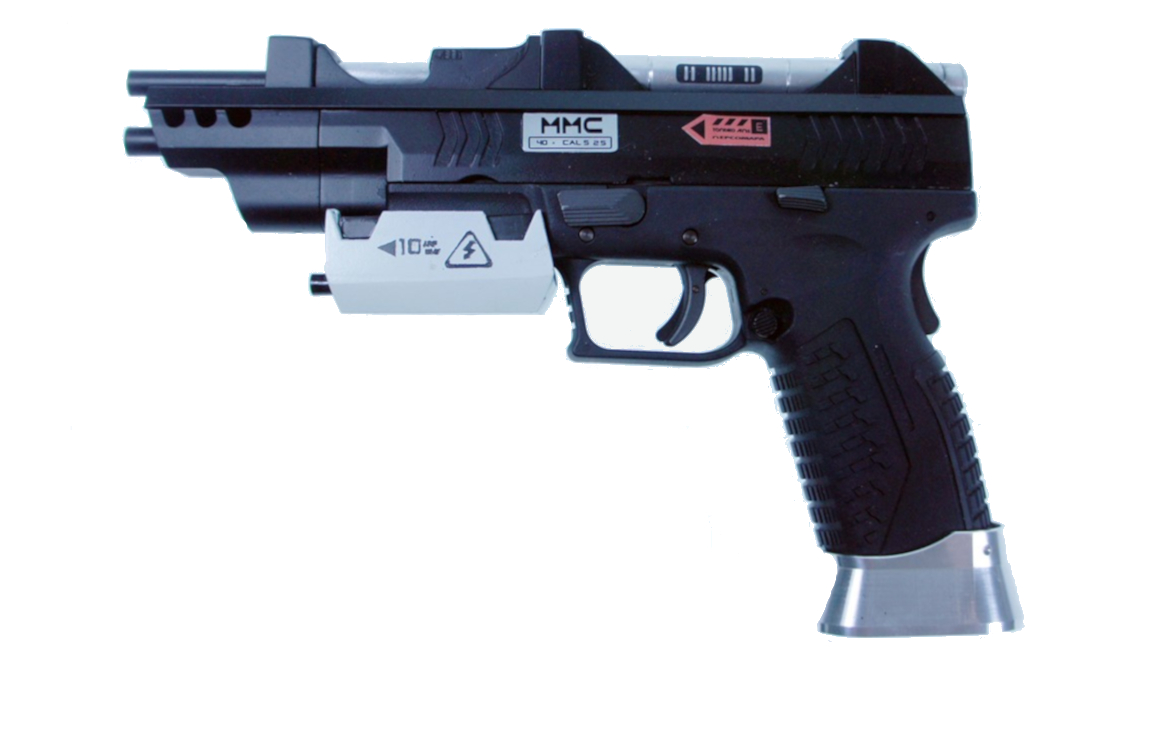
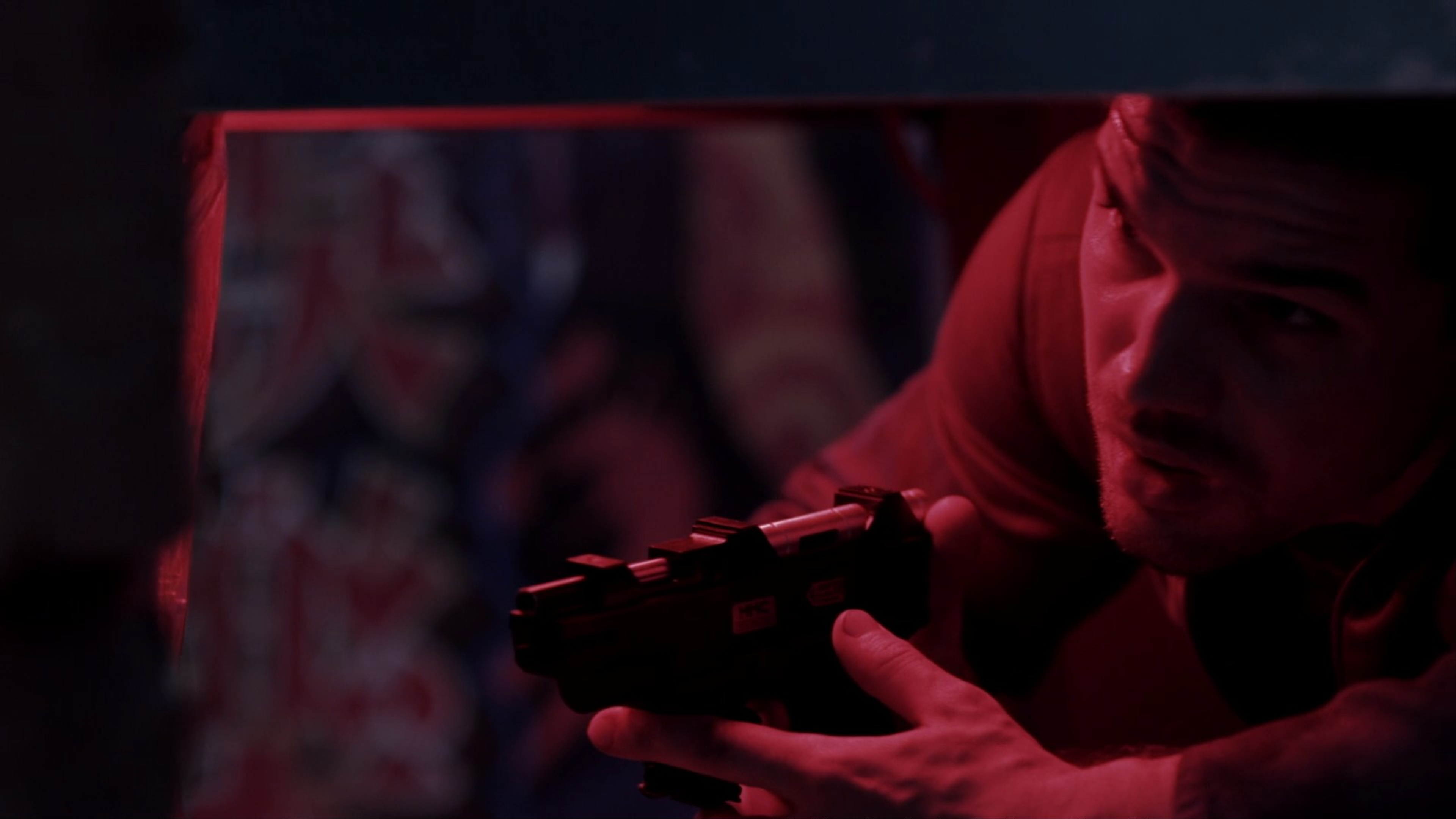
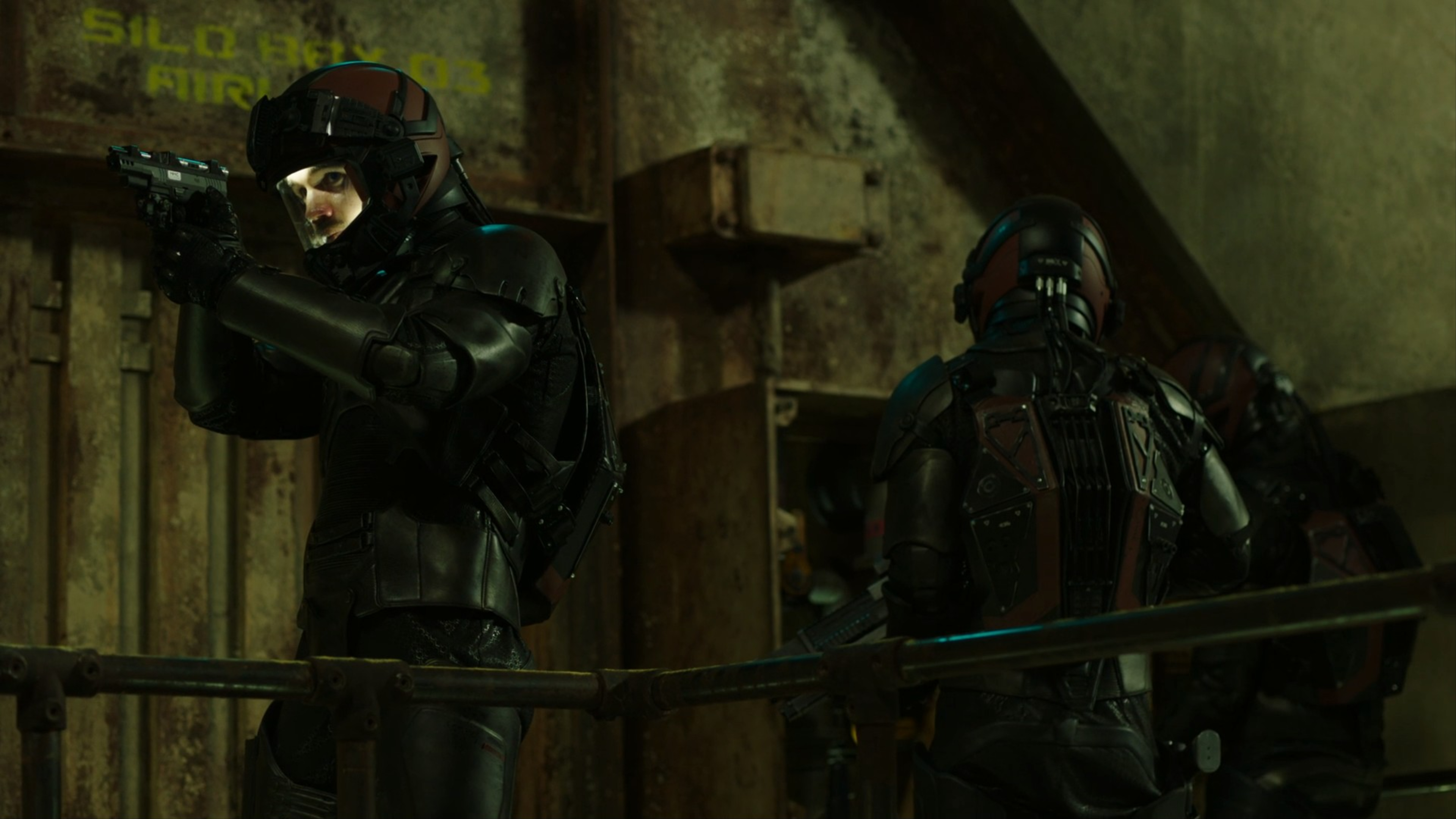
The Martian Service Pistol is the standard side arm of the Martian Congressional Republic Navy and the Martian Marine Corps. It makes its first appearance in Season 1, Episode 3, and sees continuous use throughout the series by both the crew of the Rocinante and other Martian personnel.
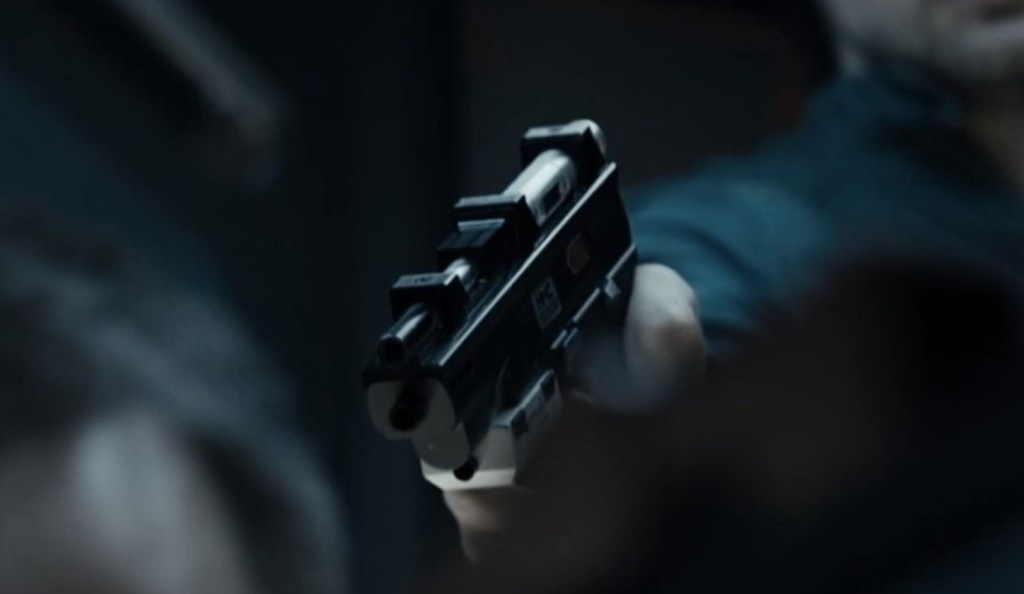
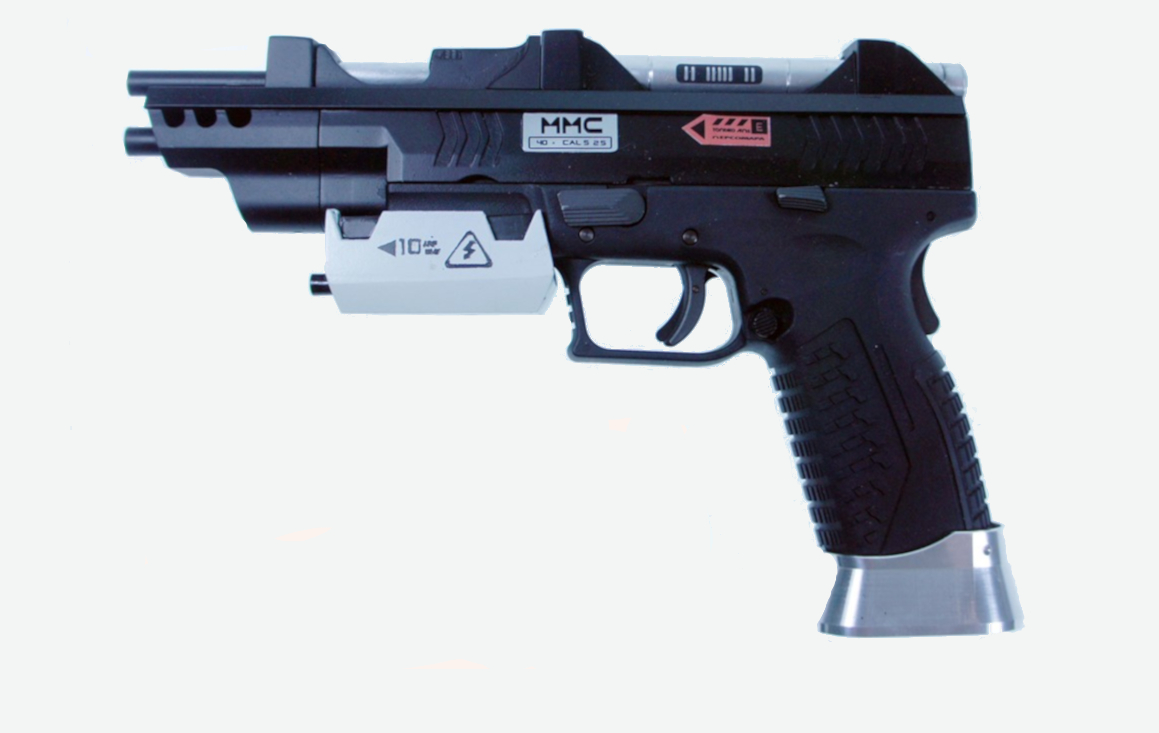
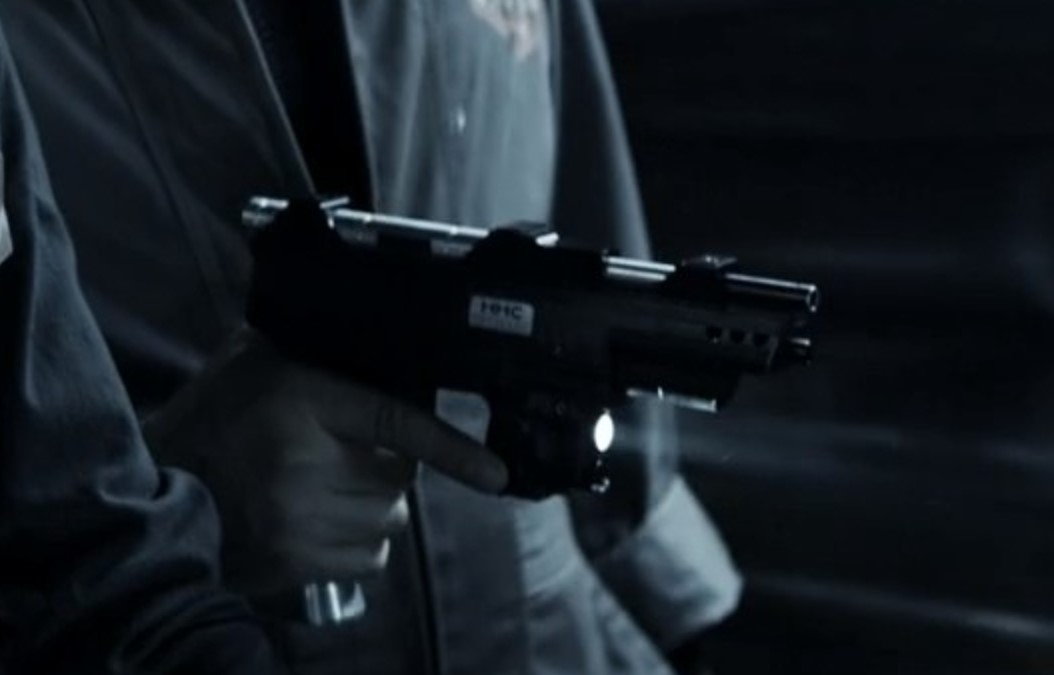
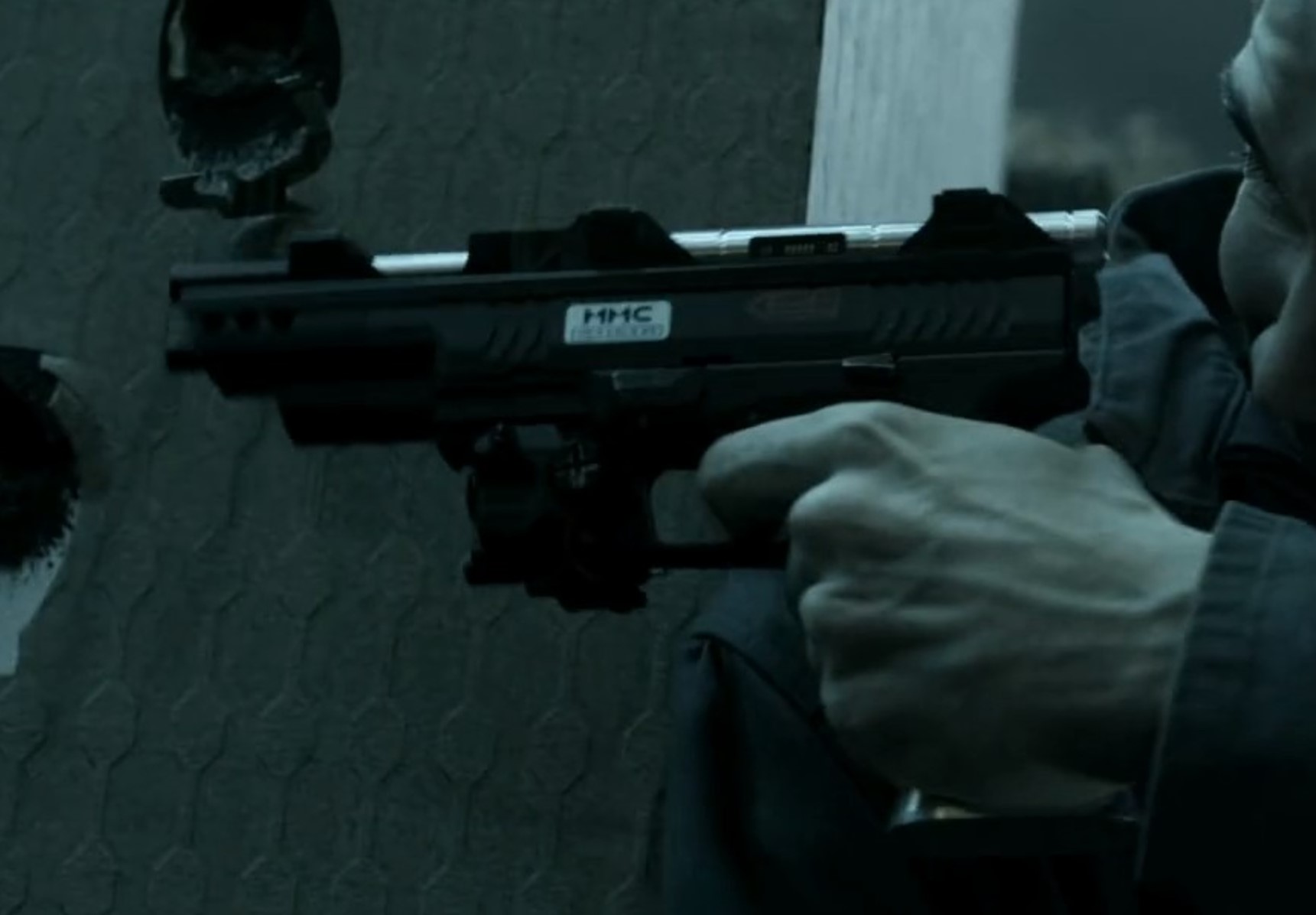
Though serving in the same role as the Star Helix Service Pistol, it has some significant design differences. It is easily recognizeable by the oversized silver colored base of the pistol grip, and the second silver-colored barrel on top of the weapon. The presence of a secondary barrel suggests that the pistol, just like the Martian Assault Rifle, has the ability to fire two different types of ammunition – chemically powered caseless ammunition for armor piercing and anti-structure purposes, and low/zero recoil ammunition from a silver barrel on top which is either electrically powered or fires self-propelled bullets. This flexibility enables Martian forces to use the same weapons in a range of scenarios by simply replacing one type of ammunition for the other. The pistol is labelled with “Cal 5 . 25”, presumably indicating that it supports projectiles with a diameter of 5.25 mm, though it is not clear if this refers to the chemically powered rounds, the low/zero recoil rounds, or both.
The pistol is shown in two variants on the show. One has an exposed upper barrel, while the other, which is only seen on a few occasions, has a fully enclosed upper barrel. Given its limited use, it is likely that this weapon is intended as a dedicated training weapon.
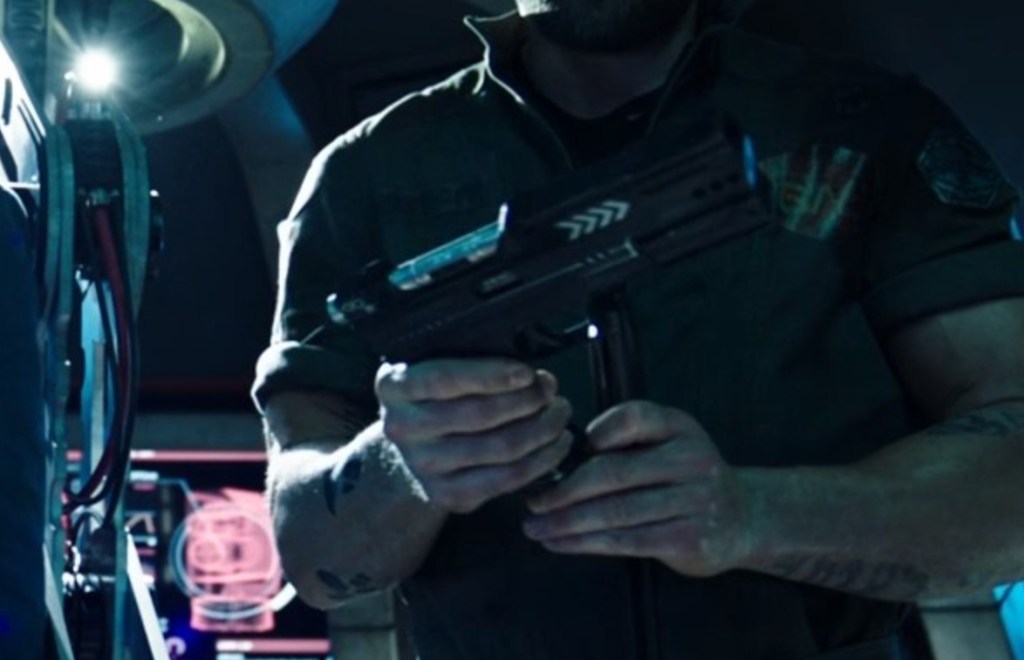
Low/Zero Recoil Ammunition Options
Though it has been suggested that this pistol uses recoilless “self-propelled rounds” with gases from the rounds being vented through the rear of the silver barrel on top, this is inconsistent with what we actually see on the show. Despite the guns seeing extensive use on multiple occasions, a complete lack of recoil combined with rear venting of gases is never shown nor commented on. Instead we see a clear and highly visible muzzle flash on multiple occasions, even in confined spaces, which is not consistent with self-propelled ammunition.
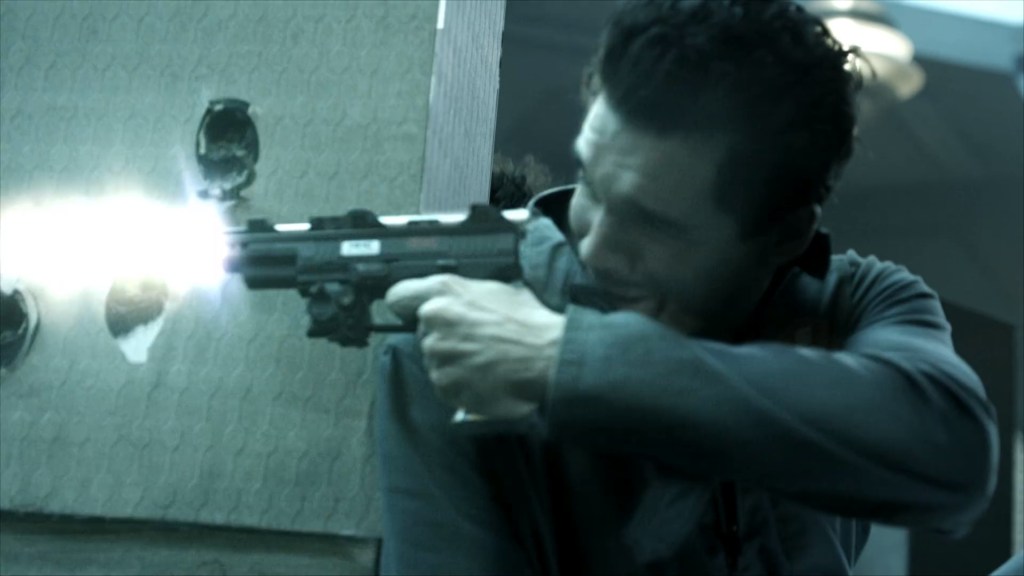
In such confined spaces, self-propelled rounds, which are essentially small rockets, would also have limited utility. Where regular bullets use the explosve energy from gunpowder to get up to speed quickly, a self-propelled round would generate that energy more gradually.
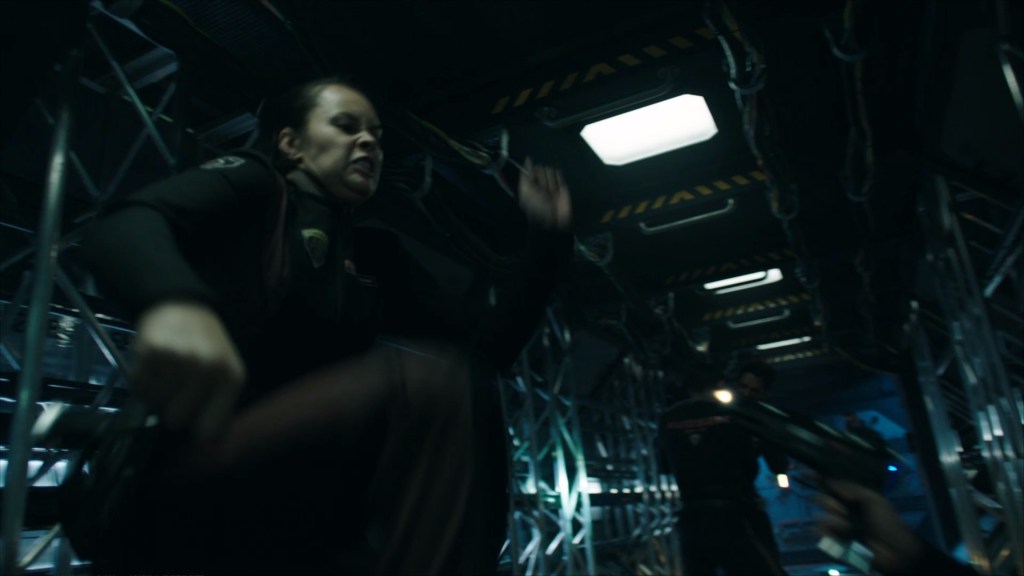
If these rounds were instead designed to accellerate to lethal speed while still in the barrel, it would be very difficult to avoid any recoil without creating other problems instead. For instance – if the gun tries to avoid recoil from the self-propelled rounds by pushing the gases they generate through the back of the barrel, it would have to do so with the same amount of force that is used to push the projectile forward. The best modern day equivalent would be a shoulder fired rocket such as the M72, which is fully recoilless, but has a powerful back blast. The same would be the case for self-propelled rounds fired from a pistol, though of course at a much smaller scale.
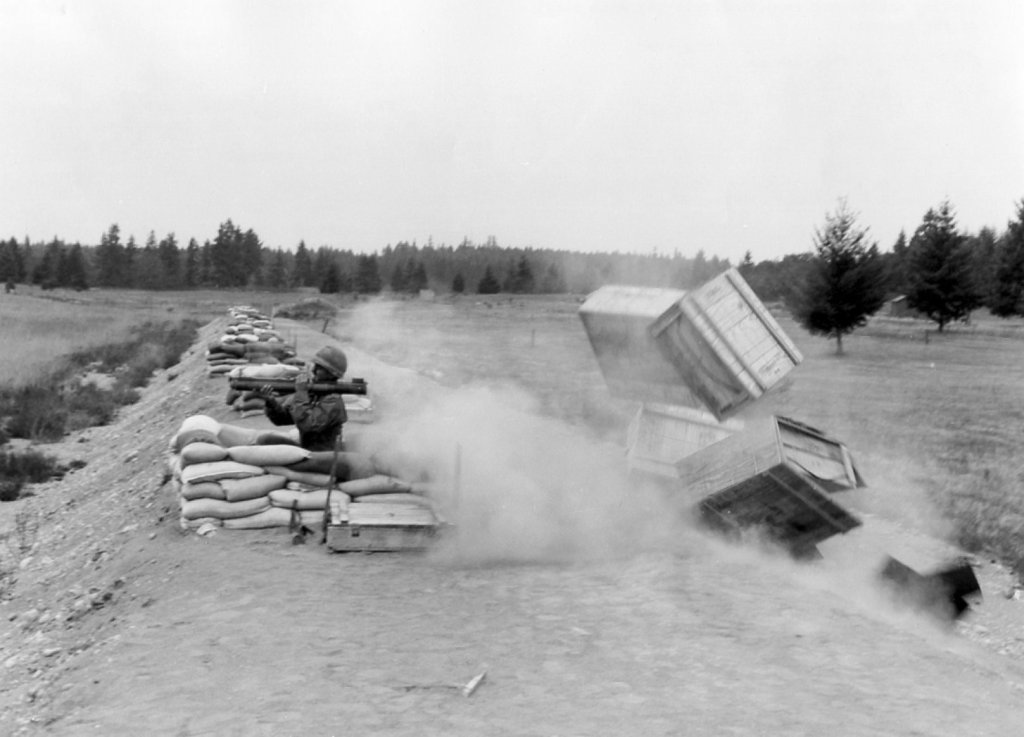
If instead the projectile was designed to accellerate just after leaving the barrel, that would likely leave it highly unstable, dramatically reducing the accuracy of the gun. This is due to the fact that the purpose of a barrel is two-fold – to give the projectile energy and to give it direction. If you continue to give the projectile energy after it has left the confines of the barrel, it will become very difficult to ensure that energy only pushes the bullet straight forward. A modern day example here is the RPG-7, a shoulder fired rocket which, in contrast to the M72, continues burning its rocket charge after it has left the barrel. The RPG-7 does this in order to allow the launcher to be used multiple times (because it doesn’t have to absord all the energy of the rocket) and to ease reloading. On the other hand this causes the RPG-7 to become considerably less accurate than the M72.
A final point is that firing self-propelled rounds in what could potentially be very small, hermetically sealed compartments on space ships and stations would also release significant amounts of heated, high-pressure gases into that environment, which would not be desireable.
It is therefore more likely that the Martian Service Pistol, as it is displayed in the show, would use electricity to power its low-recoil barrel like a gauss/coil gun, much in the same way as the Star Helix pistol. This is supported by comments made by Amos to Prax during target practice in Season 3 Episode 5, where he tells him that “the real bullets kick a lot harder than these plastic rounds.” Though it is possible that the weapon Prax uses is a dedicated training gun, since that particular weapon differs from the pistols used during the following battle, this does not support the theory of self-propelled ammunition. Rather, it is likely that the Martian pistols use plastic rounds with a metal core and base for low-recoil applications.

Real World Inspiration
The Martian Service Pistol is based on a WE X Series IPSC Airsoft gun, which in turn is based on a US version of a Croatian pistol, the HS2000. Both the airsoft and the Martial Service Pistol add significant modifications, with few commonalities with its real world starting point.

Gallery



 The Weapons of The Expanse
5 thoughts on “Martian Service Pistol”